

Derek Jacobi experienced a episode of it throughout a world tour of Hamlet. Bill Nighy struggled with it preceding The Vertical Hour debuting on Broadway. Juliet Stevenson has likened it to “a malady”. It has even prompted some to run away: Stephen Fry went missing from Cell Mates, while Lenny Henry left the stage during Educating Rita. “I’ve utterly gone,” he remarked – even if he did reappear to conclude the show.
Stage fright can trigger the jitters but it can also cause a total physical freeze-up, as well as a total verbal drying up – all directly under the spotlight. So how and why does it seize control? Can it be conquered? And what does it seem like to be seized by the actor’s nightmare?
Meera Syal describes a typical anxiety dream: “I find myself in a attire I don’t recognise, in a part I can’t remember, facing audiences while I’m exposed.” A long time of experience did not make her protected in 2010, while performing a try-out of Willy Russell’s Shirley Valentine. “Presenting a solo performance for an extended time?” she says. “That’s the factor that is going to give you stage fright. I was truly thinking of ‘fleeing’ just before opening night. I could see the exit going to the yard at the back and I thought, ‘If I ran away now, they wouldn’t be able to locate me.’”
Syal gathered the bravery to stay, then promptly forgot her dialogue – but just continued through the haze. “I looked into the unknown and I thought, ‘I’ll overcome it.’ And I did. The role of Shirley Valentine could be ad-libbed because the show was her talking to the audience. So I just moved around the stage and had a little think to myself until the script returned. I winged it for a short while, uttering complete gibberish in persona.”
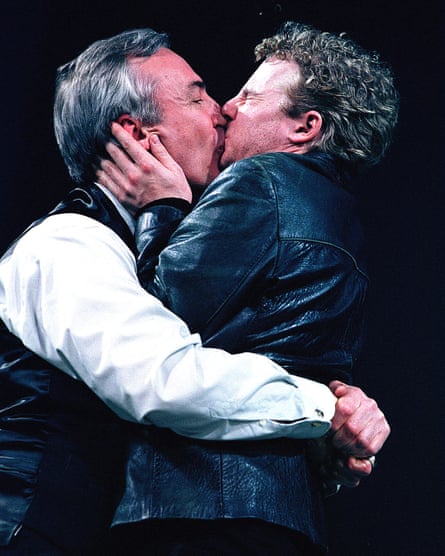
Larry Lamb has contended with intense anxiety over a long career of theatre. When he began as an beginner, long before Gavin and Stacey, he adored the practice but being on stage filled him with fear. “The moment I got in front of an audience,” he says, “it all began to get hazy. My legs would begin shaking uncontrollably.”
The stage fright didn’t diminish when he became a professional. “It continued for about three decades, but I just got better and better at hiding it.” In 2001, he dried up as Claudius in Hamlet, for the Royal Shakespeare Company. “It was the first preview at Stratford-upon-Avon. I was just into my first speech, when Claudius is addressing the people of Denmark, when my words got trapped in space. It got increasingly bad. The full cast were up on the stage, looking at me as I completely lost it.”
He got through that show but the guide recognised what had happened. “He understood I wasn’t in control but only seeming I was. He said, ‘You’re not interacting with the audience. When the illumination come down, you then block them out.’”
The director maintained the general illumination on so Lamb would have to accept the audience’s presence. It was a breakthrough in the actor’s career. “Little by little, it got easier. Because we were doing the show for the bulk of the year, gradually the anxiety vanished, until I was self-assured and actively connecting to the audience.”
Now 78, Lamb no longer has the stamina for plays but relishes his live shows, performing his own writing. He says that, as an actor, he kept obstructing of his role. “You’re not permitting the space – it’s too much you, not enough character.”
Harmony Rose-Bremner, who was chosen in The Years in 2024, echoes this. “Self-consciousness and insecurity go against everything you’re striving to do – which is to be free, relax, totally engage in the part. The question is, ‘Can I make space in my head to permit the role to emerge?’” In The Years, as one of five actors all acting as the same woman in different stages of her life, she was excited yet felt overwhelmed. “I’ve developed doing theatre. It was always my happy place. I didn’t ever think I’d ever feel nerves.”

She remembers the night of the initial performance. “I actually didn’t know if I could perform,” she says. “It was the only occasion I’d felt like that.” She succeeded, but felt overwhelmed in the very opening scene. “We were all stationary, just talking into the void. We weren’t observing one other so we didn’t have each other to bounce off. There were just the words that I’d rehearsed so many times, coming towards me. I had the standard indicators that I’d had in miniature before – but never to this degree. The sensation of not being able to breathe properly, like your air is being sucked up with a void in your lungs. There is no anchor to hold on to.” It is intensified by the feeling of not wanting to disappoint other actors down: “I felt the responsibility to the entire cast. I thought, ‘Can I get through this huge thing?’”
Zachary Hart attributes insecurity for inducing his nerves. A back condition prevented his aspirations to be a soccer player, and he was working as a fork-lift truck driver when a companion applied to theatre college on his behalf and he was accepted. “Appearing in front of people was completely unfamiliar to me, so at drama school I would wait until the end every time we did something. I stuck at it because it was total distraction – and was preferable than factory work. I was going to do my best to conquer the fear.”
His debut acting job was in Nicholas Hytner’s Julius Caesar at the Bridge theatre. When the cast were told the play would be recorded for NT Live, he was “petrified”. Some time later, in the initial performance of The Constituent, in which he was selected alongside James Corden and Anna Maxwell-Martin, he spoke his opening line. “I heard my tone – with its distinct Black Country dialect – and {looked


